Time management
Pomodoro: why scheduled breaks help you keep going
Working until you're exhausted isn't the best strategy. What studies say about the Pomodoro technique and micro-breaks, and how to get started.
By Nadir - ForgeMe · · 4 min read
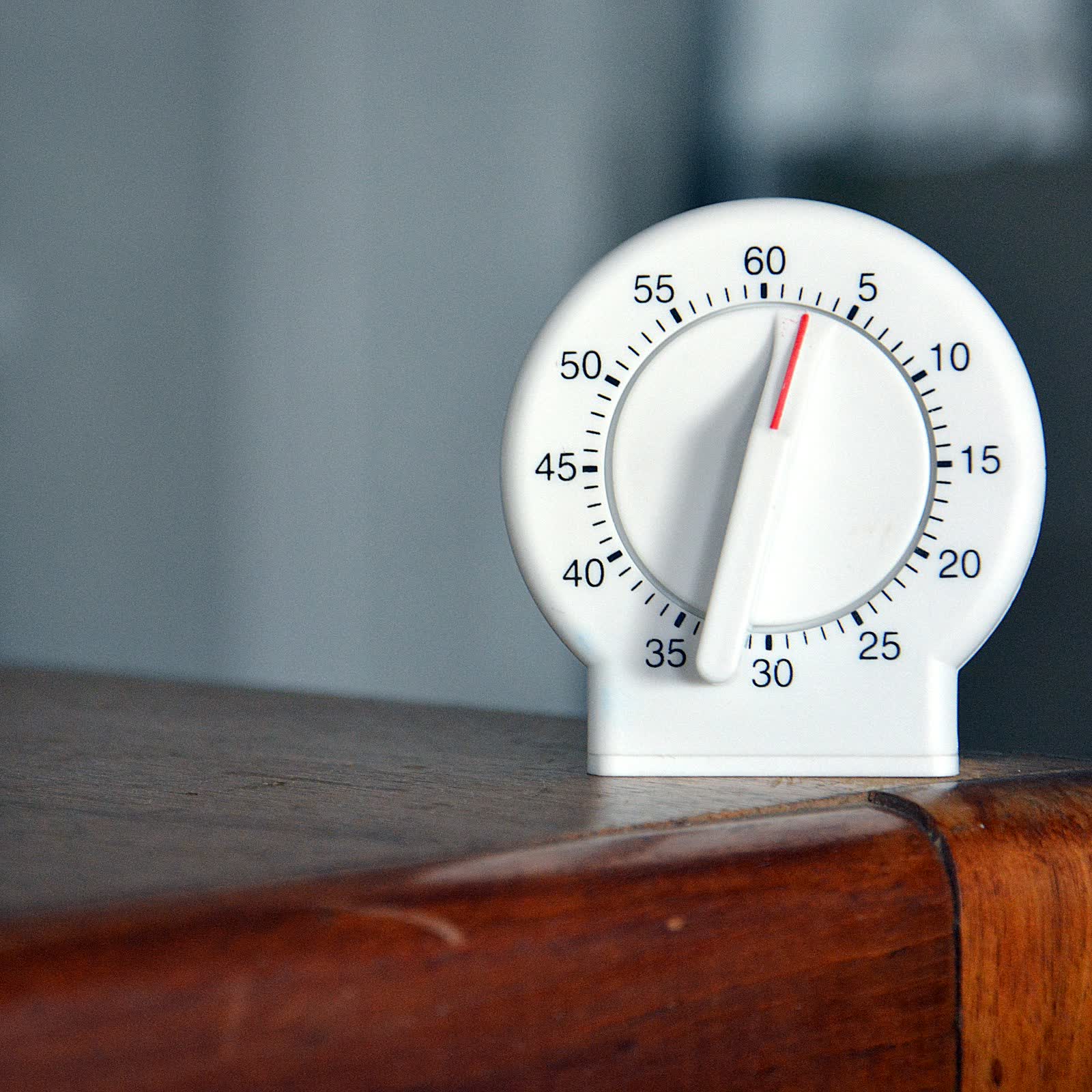
Photo: Marcelo Leal / Unsplash
You sit down to work “until it's done.” Two hours later, you're rereading the same sentence for the third time, your phone is somehow in your hand, and you're tired without having gotten much done. The best-known fix for this problem fits inside a kitchen timer. And research is starting to explain why it works.
The Pomodoro technique in a nutshell
Invented by Italian Francesco Cirillo, who used a tomato-shaped timer (pomodoro in Italian), the method is simple: you work on a single task for a short block, usually 25 minutes, then take a short break. After several blocks, you give yourself a longer break.
The point isn't the 25-minute figure itself. It's that the break is decided in advance, instead of coming when you can't take it anymore.
What a recent study showed
In 2023, Felicitas Biwer and her colleagues at Maastricht University published a study of 87 students in the British Journal of Educational Psychology. During a self-study session, they were split into three groups:
- one group took breaks whenever they wanted;
- a “Pomodoro” group: a 6-minute break after each 24-minute block;
- a group with shorter blocks: a 3-minute break every 12 minutes.
The results: students who managed their own breaks had longer sessions, but also longer breaks. They felt more tired and more distracted, and reported less concentration and motivation than the groups with scheduled breaks. Even so, all the groups got about the same amount of work done. The authors conclude that breaks set in advance bring a benefit for mood and seem more efficient: just as much work, in less time.
Why short breaks matter
A meta-analysis published in 2022 in PLOS ONE by Patricia Albulescu and her team pooled 22 study samples on micro-breaks, meaning breaks of 10 minutes or less, for a total of 2,335 participants. It shows that these breaks boost perceived energy and reduce fatigue. The effect is modest, but real.
On performance, the picture is more nuanced: the overall effect wasn't significant, but the longer the break, the more it helped. The authors suggest that after a very draining task, a break of more than 10 minutes may be needed.
The takeaway: short breaks protect you from wearing down, and for heavy tasks, don't hesitate to give yourself a real pause.
Setting up your first session
- Pick a single, specific task. Not “make progress on the project,” but “write the introduction to the report.”
- Set the stage: phone out of reach, unnecessary tabs closed, a glass of water nearby.
- Start a 25-minute timer and work only on that task. If a stray thought pops up (“remember to call the garage”), jot it down on a piece of paper and get back to your task.
- When the timer goes off, really stop, even in the middle of a sentence. Get up, stretch, look out the window. Avoid social media, which turns five minutes into twenty.
- After three or four blocks, take a longer break, 15 to 30 minutes.
Making the method your own
Biwer's study shows that 12-minute blocks also gave good results. The right format is the one you can stick to:
- A task you dread: start with 10- to 15-minute blocks. Getting started is easier when the end is in sight.
- Creative or deep work: some people prefer 40 or 50 minutes, followed by a longer break.
- A fragmented day: one or two well-protected blocks are better than a whole morning chipped away by interruptions.
Note how many blocks you do each day. After a week, you'll know how many “real” stretches of focus you actually have, which helps you plan without overloading yourself.
With ForgeMe
Before your session, break your work into tasks small enough to fit in one or two blocks: checking off each finished task marks the end of a step and makes the break well earned. If you want to make it a habit, create a “first focus session” ritual with a reminder at the time of day when you're at your best.
Sources
- Biwer, F., Wiradhany, W., oude Egbrink, M. G. A. et de Bruin, A. B. H. (2023). Understanding effort regulation: Comparing 'Pomodoro' breaks and self-regulated breaks. British Journal of Educational Psychology, 93(S2), 353-367. doi.org/10.1111/bjep.12593
- Albulescu, P., Macsinga, I., Rusu, A., Sulea, C., Bodnaru, A. et Tulbure, B. T. (2022). "Give me a break!" A systematic review and meta-analysis on the efficacy of micro-breaks for increasing well-being and performance. PLOS ONE, 17(8), e0272460. doi.org/10.1371/journal.pone.0272460
Written byNadir - ForgeMe